
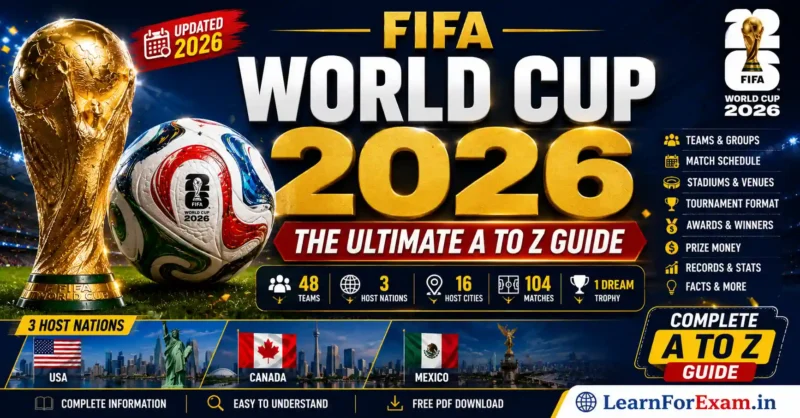
The FIFA World Cup 2026 marks a historic turning point in international football. For the first time since the tournament began in 1930, the competition features 48 national teams instead of 32, making it the largest FIFA World Cup ever organized.
Another milestone is that the Football World Cup 2026 is jointly hosted by three countries—Canada, Mexico, and the United States. This is also the first World Cup hosted by three nations and the first to span such a large geographical area across North America.
With more participating teams, additional knockout rounds, larger stadiums, cutting-edge technology, and record-breaking prize money, the 2026 tournament sets a new benchmark for global sporting events.
Millions of football fans are expected to travel across North America, while billions of viewers worldwide will watch the action unfold over nearly six weeks.
Whether you are a football enthusiast, student preparing for competitive exams, or someone looking for detailed FIFA World Cup information, this guide covers everything from host cities to tournament format and official venues.
Quick Facts About FIFA World Cup 2026
| Category | Details |
|---|---|
| Tournament | FIFA World Cup 2026 |
| Edition | 23rd FIFA World Cup |
| Champion Team | Spain (ESP) |
| Runners Up | Argentina |
| Governing Body | FIFA |
| Host Countries | United States, Canada, Mexico |
| Number of Teams | 48 |
| Confederations | 6 |
| Total Matches | 104 |
| Tournament Duration | June–July 2026 |
| Opening Match | Mexico City |
| Final Match | New York/New Jersey Stadium |
| Defending Champion | Argentina (2022 World Cup) |
| Official Match Ball | Adidas Trionda |
| Estimated Global Viewers | Over 5 billion |
| Total Prize Pool | US$1 Billion |
Why FIFA Expanded the Tournament to 48 Teams
For almost three decades, the FIFA World Cup featured 32 teams. While this format produced many memorable tournaments, it also left several strong football nations unable to qualify.
To make football more inclusive and encourage global development, FIFA approved an expansion to 48 teams beginning with the 2026 edition.
The expanded format offers several benefits:
- More countries qualify for the World Cup.
- Increased opportunities for emerging football nations.
- Greater representation from Africa, Asia, and Oceania.
- More matches for fans and broadcasters.
- Higher commercial revenue for FIFA and participating nations.
This expansion is expected to accelerate football development in regions that historically had limited World Cup representation.
Host Countries of FIFA World Cup 2026
For the first time in World Cup history, three countries are jointly organizing the tournament.
🇺🇸 United States
The United States hosts the majority of matches and provides the largest number of stadiums.
Highlights:
- 11 host cities
- Largest stadium capacities
- Advanced sports infrastructure
- Home of the final match
- Extensive transportation network
The United States previously hosted the FIFA World Cup in 1994, a tournament remembered for breaking attendance records.
🇨🇦 Canada
Canada makes history by hosting FIFA World Cup 2026 matches for the first time in the men’s tournament.
Host Cities:
- Toronto
- Vancouver
Canada’s qualification and hosting responsibilities represent a major milestone in the country’s football development.
🇲🇽 Mexico
Mexico becomes the first nation in history to host the FIFA World Cup three times.
Previous editions:
- 1970
- 1986
- 2026
Mexico City will once again welcome football fans from around the world for the opening match.
FIFA World Cup 2026 Host Cities
The FIFA world cup 2026 tournament will be played across 16 host cities.
United States (11 Cities):
| City | Stadium |
|---|---|
| Atlanta | Mercedes-Benz Stadium |
| Boston | Gillette Stadium |
| Dallas | AT&T Stadium |
| Houston | NRG Stadium |
| Kansas City | Arrowhead Stadium |
| Los Angeles | SoFi Stadium |
| Miami | Hard Rock Stadium |
| New York/New Jersey | MetLife Stadium |
| Philadelphia | Lincoln Financial Field |
| San Francisco Bay Area | Levi’s Stadium |
| Seattle | Lumen Field |
Canada (2 Cities):
| City | Stadium |
|---|---|
| Toronto | BMO Field |
| Vancouver | BC Place |
Mexico (3 Cities):
| City | Stadium |
|---|---|
| Mexico City | Estadio Azteca |
| Guadalajara | Estadio Akron |
| Monterrey | Estadio BBVA |
Largest Stadiums in FIFA World Cup 2026
| Stadium | Country | Approx. Capacity |
|---|---|---|
| AT&T Stadium | USA | 92,000+ |
| MetLife Stadium | USA | 82,500+ |
| Mercedes-Benz Stadium | USA | 75,000+ |
| SoFi Stadium | USA | 70,000+ |
| Estadio Azteca | Mexico | 83,000+ (post-renovation configuration varies) |
These iconic venues have hosted NFL games, international football, concerts, and major sporting events, making them ideal for the world’s biggest football tournament.
Which Stadium Will Host the Final of FIFA World cup 2026?
The 2026 FIFA World Cup Final is scheduled to be played at MetLife Stadium in East Rutherford, New Jersey (part of the New York metropolitan area).
Why MetLife Stadium?
- Capacity of more than 82,000 spectators
- Excellent transportation infrastructure
- Modern facilities
- Proven experience hosting international sporting events
- One of the largest stadiums in North America
Opening Match of this football world cup 2026 tournament:
The tournament officially begins at the legendary Estadio Azteca in Mexico City.
This iconic venue becomes the first stadium in football history to host opening matches across three different FIFA World Cups.
Tournament Duration:
The expanded competition runs for approximately 39 days, making it the longest FIFA World Cup in history.
During this period:
- 104 matches will be played.
- Teams will travel across North America.
- Millions of supporters are expected to attend.
- Billions of viewers will follow the tournament worldwide.
How Many Matches Will Be Played?
One of the biggest changes in the Football World Cup 2026 is the increase in the number of matches.
| Edition | Teams | Matches |
|---|---|---|
| Qatar 2022 | 32 | 64 |
| FIFA World Cup 2026 | 48 | 104 |
This increase means fans can enjoy nearly twice as many matches compared with earlier tournaments.
Key Highlights of FIFA World Cup 2026:
- Largest FIFA World Cup ever held.
- First tournament featuring 48 national teams.
- First World Cup hosted by three countries.
- Record 104 matches.
- Highest prize fund in FIFA World Cup history.
- More opportunities for Asian, African, and CONCACAF nations.
- Modern football technology and improved officiating systems.
- Greater global fan participation and economic impact.
FIFA World Cup 2026 Teams: Qualification, Groups, Match Schedule and New Tournament Format Explained
The FIFA World Cup 2026 introduces the biggest structural change in the tournament’s history. Instead of 32 teams, 48 national teams compete for football’s most prestigious trophy.
This expansion gives more countries the opportunity to participate while maintaining a highly competitive tournament. Fans will also enjoy a record 104 matches, a new Round of 32, and an extended competition lasting nearly six weeks.
In this chapter, you’ll learn how teams qualified, how the tournament is organized, and how each stage leads to the World Cup Final.
How Many Teams Are Playing in FIFA World Cup 2026?
For the first time, 48 national teams compete in the FIFA World Cup.
| Edition | Teams |
|---|---|
| 1998–2022 | 32 |
| FIFA World Cup 2026 | 48 |
The increase allows more nations from every continent to participate, making the tournament more inclusive than ever before.
FIFA World Cup 2026 Qualification Slots by Confederation
Each continental football confederation receives more qualification places than in previous tournaments.
| Confederation | Qualification Slots |
|---|---|
| AFC (Asia) | 8 direct + 1 playoff |
| CAF (Africa) | 9 direct + 1 playoff |
| CONCACAF (North & Central America) | 6 direct (including hosts) + 2 playoff |
| CONMEBOL (South America) | 6 direct + 1 playoff |
| OFC (Oceania) | 1 direct + 1 playoff |
| UEFA (Europe) | 16 direct |
| Intercontinental Playoff | 2 remaining places |
Note: The United States, Canada, and Mexico automatically qualified as host nations, reducing the number of qualifying spots available within CONCACAF.
Why FIFA Increased Qualification Slots:
The expansion reflects football’s growing popularity worldwide.
Benefits include:
- More representation from Asia and Africa.
- Greater opportunities for developing football nations.
- Increased global fan engagement.
- More competitive international football.
- Stronger football development programs across continents.
Several countries made history by qualifying for their first FIFA World Cup, highlighting the success of the expanded format.
FIFA World cup 2026: Tournament Structure
The tournament follows three major phases:
1. Group Stage
- 48 teams
- 12 groups
- 4 teams in each group
Each team plays:
- 3 group matches
- One match against every other team in its group
2. Qualification for Knockout Stage
Unlike previous editions, more teams advance.
The following qualify:
- Top two teams from each group (24 teams)
- Eight best third-placed teams
Total teams advancing:
32 teams
This creates the first-ever Round of 32 in FIFA World Cup history.
3. Knockout Stage
After the group stage:
Round of 32
↓
Round of 16
↓
Quarter-finals
↓
Semi-finals
↓
Third-place Playoff
↓
Final
Every knockout match must produce a winner.
If scores are level after 90 minutes:
- Extra Time (30 minutes)
- Penalty Shootout (if required)
Total Number of matches in FIFA World Cup 2026 Tournaments:
| Stage | Matches |
|---|---|
| Group Stage | 72 |
| Round of 32 | 16 |
| Round of 16 | 8 |
| Quarter-finals | 4 |
| Semi-finals | 2 |
| Third-place Playoff | 1 |
| Final | 1 |
| Total | 104 |
FIFA World Cup 2026 Match Schedule Overview:
| Stage | Approximate Timeline |
|---|---|
| Opening Match | Mid-June 2026 |
| Group Stage | Mid-June to Late June |
| Round of 32 | Late June |
| Round of 16 | Early July |
| Quarter-finals | Early July |
| Semi-finals | Mid-July |
| Third-place Match | Mid-July |
| Final | Mid-July |
The exact fixture list and kick-off times were announced separately by FIFA and depend on venue assignments.
How Teams Earn Points
The scoring system remains unchanged.
| Result | Points |
|---|---|
| Win | 3 |
| Draw | 1 |
| Loss | 0 |
Group Ranking Rules of Football world cup 2026
If two or more teams finish with the same number of points, FIFA uses the following tie-breakers:
- Goal difference
- Goals scored
- Head-to-head points
- Head-to-head goal difference
- Head-to-head goals scored
- Fair Play points
- Drawing of lots (if required)
These rules ensure a clear ranking within each group.
Intercontinental Playoff
The final qualification places are decided through the FIFA Intercontinental Playoff Tournament.
Participating confederations include:
- AFC
- CAF
- CONMEBOL
- CONCACAF
- OFC
The playoff determines the last teams to qualify for the World Cup.
Why the New Format Is Important
The new structure offers several advantages:
- More countries experience World Cup football.
- Increased opportunities for smaller football nations.
- More high-quality matches.
- Greater global television audience.
- Enhanced commercial value.
- More competitive knockout football.
Teams Expected to Challenge for the Trophy
Although every qualified nation starts with the same objective, several teams traditionally enter the tournament as favourites based on recent performances, squad depth, and international rankings.
🇦🇷 Argentina
- Defending 2022 FIFA World Cup champions.
- Blend of experienced leaders and emerging talent.
- Strong tournament pedigree.
🇫🇷 France
- One of the most consistent teams in recent World Cups.
- Deep squad with world-class players in every position.
🇪🇸 Spain
- Possession-based style and technically gifted young players.
- UEFA Euro 2024 champions.
🇧🇷 Brazil
- Record five-time World Cup winners.
- Renowned for attacking football and individual brilliance.
🏴 England
- Strong performances in recent major tournaments.
- Balanced squad with quality across all positions.
🇵🇹 Portugal
- A talented generation featuring experienced stars and rising youngsters.
🇩🇪 Germany
- Four-time world champions aiming to return to the top after rebuilding.
These teams are often considered title contenders, but the expanded format increases the possibility of surprise performances from emerging football nations.
Nations That Could Be Surprise Packages
Every World Cup produces unexpected stories. Teams capable of upsetting traditional favorites include:
- Morocco
- Japan
- United States
- Canada
- Senegal
- Switzerland
- Croatia
- South Korea
Recent international tournaments have shown that disciplined organization and tactical flexibility can overcome differences in reputation.
What Makes the 2026 World Cup Different?
Compared with previous editions, the 2026 tournament introduces several historic changes:
| Feature | 2022 World Cup | 2026 World Cup |
|---|---|---|
| Teams | 32 | 48 |
| Groups | 8 | 12 |
| Matches | 64 | 104 |
| Host Nations | 1 | 3 |
| Knockout Starts | Round of 16 | Round of 32 |
| Duration | About 29 days | About 39 days |
These changes make the Football World Cup 2026 the most ambitious edition ever organized.
Key Takeaways of Football World Cup 2026
- 48 national teams compete in the largest FIFA World Cup ever.
- Teams are divided into 12 groups of four.
- The top two teams from each group, plus the eight best third-placed teams, advance to the Round of 32.
- A total of 104 matches will be played.
- The tournament is jointly hosted by Canada, Mexico, and the United States.
- The expanded format offers more opportunities for emerging football nations while preserving the excitement of knockout football.
FIFA World Cup 2026 Technology: How FIFA Is Changing the Future of Football
The FIFA World Cup 2026 is not only the biggest tournament in football history but also one of the most technologically advanced sporting events ever organized.
From artificial intelligence (AI) and connected footballs to semi-automated offside detection and advanced video review systems, FIFA continues to modernize the game while improving fairness, transparency, and fan engagement.
These innovations help referees make more accurate decisions, reduce controversial moments, improve player safety, and provide a better viewing experience for millions of fans around the world.
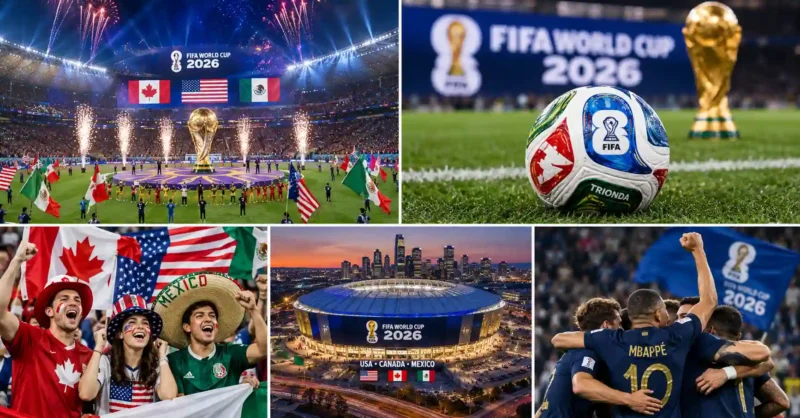
Official Match Ball of FIFA World Cup 2026
The official match ball for the FIFA World Cup 2026 is Adidas Trionda.
Adidas has designed every FIFA World Cup official match ball since 1970, and the Trionda continues this tradition with modern engineering and digital technology.
Key Features of Adidas Trionda:
| Feature | Details |
|---|---|
| Manufacturer | Adidas |
| Official Tournament Ball | FIFA World Cup 2026 |
| Technology | Connected Ball Technology |
| Purpose | Better accuracy, tracking, and referee assistance |
| Sustainability | Manufactured using environmentally conscious materials |
The design reflects the shared identity of the tournament's three host nations—Canada, Mexico, and the United States—while incorporating bold colors and aerodynamic panel construction.
Connected Ball Technology of Football world cup 2026
One of the biggest innovations in modern football is Connected Ball Technology.
Inside the ball is a tiny motion sensor that continuously records movement during play.
How It Works
The sensor can detect:
- Exact moment a player touches the ball
- Ball speed
- Spin rate
- Position
- Direction of movement
This information is transmitted in real time to the Video Assistant Referee (VAR) system.
Benefits
Connected Ball Technology helps officials:
- Detect handball incidents
- Improve offside accuracy
- Determine exact ball contact
- Assist VAR decisions
- Reduce controversial referee calls
The technology works hundreds of times every second, making it significantly more accurate than human observation alone.
Semi-Automated Offside Technology (SAOT)
Offside decisions have traditionally been among the most debated moments in football.
To improve accuracy, FIFA uses Semi-Automated Offside Technology (SAOT).
How SAOT Works
The system combines:
- Multiple stadium-mounted tracking cameras
- Artificial intelligence
- Connected Ball Technology
- Player position tracking
The cameras monitor player movements while the ball sensor records the exact kick point.
The combined data allows officials to identify offside situations much faster than traditional VAR methods.
Advantages
- Faster decisions
- Greater accuracy
- Reduced human error
- Less interruption during matches
- Improved transparency for spectators
Fans also see animated 3D visualizations explaining offside decisions on stadium screens and television broadcasts.
Video Assistant Referee (VAR)
VAR remains one of the most important technologies in international football.
Instead of replacing referees, VAR provides additional support when reviewing crucial incidents.
VAR Reviews Four Types of Incidents
Goal Decisions
Checks include:
- Offside
- Handball
- Fouls
- Ball out of play
Penalty Decisions
VAR reviews:
- Handball
- Fouls
- Simulation
- Contact inside or outside the penalty area
Direct Red Cards
Reviews dangerous tackles, violent conduct, or serious foul play.
Mistaken Identity
Ensures the correct player receives disciplinary action.
Artificial Intelligence in FIFA World Cup 2026
Artificial intelligence now plays an increasingly important role in football.
AI assists officials by processing thousands of data points every second.
Applications include:
- Player movement analysis
- Tactical statistics
- Match analytics
- Performance tracking
- Injury risk monitoring
- Broadcast graphics
- Real-time insights
It is important to note that AI supports decision-making but does not replace the referee’s authority on the field.
Goal-Line Technology used in football world cup 2026 format
Goal-Line Technology has become a standard feature in major FIFA tournaments.
How It Works
Several high-speed cameras track the ball continuously.
If the entire ball crosses the goal line, the referee’s watch receives an instant signal—usually within one second.
This system eliminates uncertainty over whether a goal has been scored.
Referee Communication System
Modern referees wear advanced communication equipment.
This allows:
- Instant communication between on-field officials
- Continuous contact with VAR
- Coordination during reviews
- Faster decision-making
The communication system is encrypted to prevent interference.
Player Performance Tracking
Teams now use wearable technologies and performance analytics during training and recovery.
Collected data may include:
- Running distance
- Sprint speed
- Heart rate
- Acceleration
- Recovery time
- Workload
These insights help coaching staff optimize training and reduce injury risk. During official matches, FIFA regulates the use of wearable devices according to competition rules.
Advanced Stadium Technology used in football world cup 2026
World Cup venues feature modern digital infrastructure.
Examples include:
High-Speed Internet
Provides seamless connectivity for fans, media, and tournament operations.
Smart Security Systems
AI-assisted surveillance and crowd management enhance safety.
Digital Ticketing
Electronic tickets reduce fraud and improve entry efficiency.
Cashless Payments
Many stadiums encourage digital transactions for faster service.
Sustainable Stadium Operations
Environmental sustainability is a major focus of the Football World Cup 2026.
Key initiatives include:
- Energy-efficient lighting
- Recycling programs
- Water conservation
- Public transportation incentives
- Reduced single-use plastics
- Renewable energy integration at selected venues
These efforts aim to minimize the tournament’s environmental impact.
Enhanced Fan Eaxperience
Technology also improves the experience for supporters.
Fans can benefit from:
- Official FIFA mobile apps
- Live match statistics
- Interactive stadium maps
- Real-time transportation updates
- Digital match tickets
- Augmented reality experiences
- Multiple-language support
This creates a more connected and engaging matchday experience.
Medical Innovations
Player health remains a top priority.
Medical teams use advanced technologies for:
- Injury diagnosis
- Concussion assessment
- Hydration monitoring
- Heat stress management
- Recovery planning
Emergency response systems are also integrated into every World Cup stadium.
Cybersecurity
With millions of digital users accessing FIFA platforms, cybersecurity is essential.
Measures include:
- Data encryption
- Secure ticket verification
- Multi-factor authentication
- Fraud prevention systems
- Network monitoring
These safeguards help protect fans, teams, and tournament operations.
Why Technology Matters in Modern Football
Modern football is faster than ever before.
Technology helps ensure:
- Fairer decisions
- Greater accuracy
- Better player safety
- Improved fan engagement
- More transparent officiating
While human referees remain central to the game, technology provides valuable support in high-pressure situations.
Quick Comparison of FIFA World Cup 2026 Technology:
| Technology | Purpose | Benefit |
|---|---|---|
| Connected Ball | Tracks ball movement | Improves VAR accuracy |
| Semi-Automated Offside | Detects offside | Faster, more precise decisions |
| VAR | Reviews key incidents | Reduces major officiating errors |
| Goal-Line Technology | Confirms goals | Eliminates goal-line disputes |
| AI Analytics | Processes match data | Supports officials and broadcasters |
| Smart Stadium Systems | Venue management | Better fan experience |
| Digital Ticketing | Secure entry | Faster stadium access |
Key Takeaways FIFA World Cup 2026 Technology
- Adidas Trionda serves as the official match ball for the FIFA World Cup 2026.
- Connected Ball Technology and Semi-Automated Offside Technology work together to improve officiating accuracy.
- VAR, Goal-Line Technology, and AI continue to enhance fairness and transparency.
- Modern stadiums focus on sustainability, digital services, and fan convenience.
- Advanced medical, security, and analytics systems support both players and spectators throughout the tournament.
FIFA World Cup 2026 Prize Money, Awards, Golden Boot, Golden Ball, Golden Glove & Complete List of Trophies
Winning the FIFA World Cup is the ultimate dream for every footballer. Beyond lifting the iconic trophy, teams and players compete for prestigious individual awards and a record-breaking prize fund.
For the FIFA World Cup 2026, FIFA has announced the largest financial package in World Cup history, reflecting the tournament’s expansion to 48 teams and its increased global commercial value.
Individual awards such as the Golden Ball, Golden Boot, and Golden Glove recognize the tournament’s standout performers, while the Fair Play Award celebrates discipline and sportsmanship.
In this chapter, you’ll learn about the World Cup prize money, individual honors, selection criteria, and the significance of each award.
FIFA World Cup 2026 Total Prize Money
The total prize fund for the FIFA World Cup 2026 is US$1 billion, making it the highest in the tournament’s history.
The increased prize pool is driven by:
- Expansion to 48 teams.
- More matches (104 instead of 64).
- Increased broadcasting revenue.
- Higher sponsorship income.
- Growing global audience.
Estimated Prize Money Distribution
Note: FIFA finalizes the exact distribution after the tournament regulations are published. The table below reflects the announced total fund and the general distribution structure used for participating teams.
| Achievement | Prize Money |
|---|---|
| Champions | Highest payout |
| Runners-up | Second-highest payout |
| Third Place | Additional reward |
| Fourth Place | Financial reward |
| Quarter-finalists | Participation reward |
| Round of 16 / Round of 32 | Stage-based payments |
| Group Stage Teams | Guaranteed participation payment |
Every qualified nation receives financial support from FIFA, even if it does not progress beyond the group stage.
FIFA World Cup Trophy
The FIFA World Cup Trophy is one of the most recognizable sporting trophies in the world.
| Feature | Details |
|---|---|
| Material | 18-carat gold |
| Height | 36.8 cm |
| Weight | Approximately 6.1 kg |
| Introduced | 1974 FIFA World Cup |
| Current Holder | Spain (2026 Champions) |
Unlike the original Jules Rimet Trophy, the modern FIFA World Cup Trophy remains the property of FIFA. The winning nation receives the official trophy during the ceremony and later keeps a gold-plated replica.
Golden Ball Award
The Golden Ball is presented to the tournament’s best overall player.
The winner is selected based on:
- Overall performance.
- Match influence.
- Leadership.
- Technical ability.
- Consistency.
- Contribution to team success.
Other Awards
- Golden Ball – Best Player
- Silver Ball – Second Best Player
- Bronze Ball – Third Best Player
The FIFA Technical Study Group, together with media representatives, evaluates players throughout the tournament.
Golden Boot Award
The Golden Boot is awarded to the tournament’s top goal scorer.
Ranking Criteria
- Most goals scored.
- Most assists.
- Fewest minutes played.
If players finish level on goals, assists become the first tie-breaker.
This award often highlights the world’s most prolific strikers and attacking midfielders.
Golden Glove Award
The Golden Glove recognizes the best goalkeeper of the tournament.
Selection is based on:
- Clean sheets.
- Crucial saves.
- Overall consistency.
- Leadership.
- Distribution and decision-making.
- Performance in important matches.
Goalkeepers are evaluated by FIFA’s Technical Study Group throughout the competition.
Best Young Player Award football world cup 2026 format
This award honors the tournament’s most impressive young footballer.
Eligibility generally applies to players meeting FIFA’s age criteria for the tournament.
Evaluation includes:
- Technical quality.
- Tactical intelligence.
- Consistency.
- Impact on matches.
- Potential for future success.
Many previous winners have gone on to become global football stars.
FIFA Fair Play Award
The Fair Play Award is presented to the team demonstrating exemplary sportsmanship.
Factors include:
- Respect for opponents.
- Respect for referees.
- Fewest disciplinary sanctions.
- Positive team behavior.
- Fair conduct throughout the tournament.
The award encourages teams to compete with integrity and respect.
Man of the Match Award
A Player of the Match is selected after every game.
Selection considers:
- Individual performance.
- Match-winning contribution.
- Influence on the game’s outcome.
- Fan engagement and expert evaluation (subject to FIFA’s process for the tournament).
This recognition celebrates outstanding performances in individual matches.
Team Performance Bonuses
Beyond FIFA prize money, many national football associations provide additional incentives to players and coaching staff.
These bonuses may include:
- Championship rewards.
- Qualification bonuses.
- Performance-based payments.
- Government honors.
- National awards.
- Sponsorship incentives.
The structure varies from country to country.
What Happens to the Winning Team?
The FIFA World Cup champions receive:
- The FIFA World Cup Trophy during the ceremony.
- Gold medals for eligible squad members and officials.
- Championship prize money.
- Global recognition.
- Automatic qualification for certain FIFA events where applicable under current regulations.
- Historic status as World Champions.
Winning the World Cup remains the pinnacle of international football.
Medal Distribution of FIFA World cup
Following the final, medals are presented to:
- Champions (Gold)
- Runners-up (Silver)
- Third-place team (Bronze)
These medals recognize the achievements of players, coaches, and eligible team officials.
Which Award Is Considered the Most Prestigious?
Among individual honours:
| Award | Significance |
|---|---|
| Golden Ball | Best overall player |
| Golden Boot | Top goal scorer |
| Golden Glove | Best goalkeeper |
| Best Young Player | Best emerging talent |
| Fair Play Award | Best sportsmanship |
The Golden Ball is widely regarded as the tournament’s highest individual honor because it recognizes the most influential player across the entire competition.
Historic Winners of Major FIFA World Cup Awards
| Award | Famous Previous Winners |
|---|---|
| Golden Ball | Diego Maradona, Zinedine Zidane, Luka Modrić, Lionel Messi |
| Golden Boot | Ronaldo, Miroslav Klose, Harry Kane, Kylian Mbappé |
| Golden Glove | Iker Casillas, Manuel Neuer, Emiliano Martínez |
| Best Young Player | Thomas Müller, Paul Pogba, Kylian Mbappé |
These players left a lasting legacy through exceptional World Cup performances.
What Makes These Awards Special?
Winning a FIFA World Cup individual award can:
- Increase a player’s market value.
- Strengthen Ballon d’Or credentials.
- Enhance international reputation.
- Create historic records.
- Inspire future generations.
- Secure a place in football history.
Key Takeaways
- FIFA World Cup 2026 features a record US$1 billion prize fund.
- Every participating team receives financial compensation.
- The Golden Ball honors the tournament’s best player.
- The Golden Boot recognizes the top goal scorer.
- The Golden Glove celebrates the best goalkeeper.
- The Best Young Player award highlights emerging talent.
- The Fair Play Award promotes respect and sportsmanship.
FIFA World Cup 2026 Award Winners (Official)
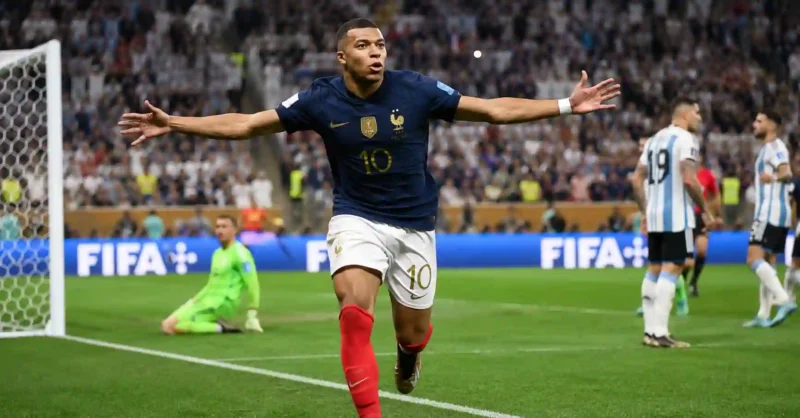
Following Spain’s victory over Argentina in the final, FIFA announced the tournament’s individual award winners. Spain dominated both on the field and in the post-tournament honours, while France’s Kylian Mbappé finished as the leading goalscorer.
| Award | Winner | Country |
|---|---|---|
| 🏆 FIFA World Cup Champion | Spain | 🇪🇸 Spain |
| 🥈 Runner-up | Argentina | 🇦🇷 Argentina |
| 🥉 Third Place | England | 🏴 England |
| ⚽ Golden Ball (Best Player) | Rodri | 🇪🇸 Spain |
| ⚽ Silver Ball | Lionel Messi | 🇦🇷 Argentina |
| ⚽ Bronze Ball | Kylian Mbappé | 🇫🇷 France |
| 👟 Golden Boot (Top Scorer) | Kylian Mbappé | 🇫🇷 France |
| 🧤 Golden Glove (Best Goalkeeper) | Unai Simón | 🇪🇸 Spain |
| 🌟 Best Young Player | Pau Cubarsí | 🇪🇸 Spain |
| 🤝 FIFA Fair Play Award | Spain | 🇪🇸 Spain |
Key Highlights of FIFA World cup 2026:
- Spain won their second FIFA World Cup title, defeating Argentina 1–0 after extra time in the final.
- Rodri was named the Golden Ball winner after controlling Spain’s midfield throughout the tournament.
- Kylian Mbappé claimed the Golden Boot, becoming one of the few players to win the award twice in World Cup history.
- Unai Simón received the Golden Glove after a series of outstanding performances and helping Spain concede only one goal throughout the tournament.
- Pau Cubarsí was recognized as the Best Young Player, highlighting Spain’s emerging generation of talent.
- Spain also received the FIFA Fair Play Award, completing a remarkable sweep of the tournament’s major honors.
What is the total prize money for FIFA World Cup 2026?
The FIFA World Cup 2026 features a record US$1 billion prize fund, making it the largest prize pool in FIFA World Cup history.
Who receives the Golden Boot?
What is the total prize money for FIFA World Cup 2026?
The FIFA World Cup 2026 features a record US$1 billion prize fund, making it the largest prize pool in FIFA World Cup history.
What is the Golden Ball of FIFA world cup?
The Golden Ball is awarded to the best overall player of the FIFA World Cup 2026, based on performance, consistency, leadership, and overall impact.
Can a goalkeeper win the Golden Ball?
Yes. Although uncommon, a goalkeeper can win the Golden Ball if they are judged to be the tournament’s most outstanding player.
Does every team receive prize money?
Yes. Every nation participating in the Football World Cup 2026 receives financial compensation from FIFA, with additional prize money based on tournament progress.
When will the FIFA World Cup 2026 take place?
The FIFA World Cup 2026 will be held from 11 June to 19 July 2026, making it the longest FIFA World Cup in history.
Which countries are hosting the FIFA World Cup 2026?
The tournament is jointly hosted by the United States, Canada, and Mexico, marking the first FIFA World Cup hosted by three countries.
How many teams are playing in the FIFA World Cup 2026?
A total of 48 national teams will compete in the FIFA World Cup 2026, an increase from 32 teams in previous editions.
How many matches will be played in the Football World Cup 2026?
The expanded tournament will feature 104 matches, making it the biggest FIFA World Cup ever.
What is the format of the FIFA World Cup 2026?
The 48 teams are divided into 12 groups of four teams. The top two teams from each group, along with the eight best third-placed teams, qualify for the Round of 32.
Where will the FIFA World Cup 2026 final be played?
The FIFA World Cup 2026 Final will be played at MetLife Stadium in New Jersey, USA.
What is the official match ball of the FIFA World Cup 2026?
The official match ball for the FIFA World Cup 2026 is Adidas Trionda, featuring Connected Ball Technology to assist referees and VAR decisions.
What new technologies are being used in the FIFA World Cup 2026?
The tournament uses VAR, Semi-Automated Offside Technology (SAOT), Connected Ball Technology, Goal-Line Technology, AI-powered analytics, and advanced digital stadium systems.
Which team won the FIFA World Cup 2026?
Spain won the FIFA World Cup 2026, defeating Argentina 1–0 after extra time in the final to lift their second FIFA World Cup title.
Who won the Golden Ball in FIFA World Cup 2026?
Rodri (Spain) won the Golden Ball, recognizing him as the tournament’s best player.
Who won the Golden Boot in FIFA World Cup 2026?
Kylian Mbappé (France) won the Golden Boot after finishing as the tournament’s highest goal scorer.
Who won the Golden Glove in FIFA World Cup 2026?
Unai Simón (Spain) received the Golden Glove for his outstanding goalkeeping performances throughout the tournament.
Who was named the Best Young Player in FIFA World Cup 2026?
Pau Cubarsí (Spain) won the Best Young Player Award for his exceptional performances during the tournament.
Which team received the FIFA Fair Play Award in 2026?
Spain received the FIFA Fair Play Award for demonstrating outstanding discipline and sportsmanship throughout the competition.
Where can I find the latest FIFA World Cup 2026 updates?
You can bookmark this page for the latest FIFA World Cup 2026 news, match schedules, results, standings, award winners, records, statistics, and tournament updates.
Conclusion
The FIFA World Cup 2026 marks the beginning of a new chapter in football history. With an expanded 48-team format, 104 matches, 16 host cities, and three host nations—the United States, Canada, and Mexico—it will be the biggest and most inclusive Football World Cup 2026 ever held.
From the historic opening match at Estadio Azteca to the grand final at MetLife Stadium, this tournament promises unforgettable moments, fierce competition, emerging stars, and world-class football. The introduction of advanced technologies such as Connected Ball Technology, Semi-Automated Offside Technology, VAR, and smart stadium innovations will further enhance fairness, player performance, and the overall fan experience.
In this ultimate guide, we’ve covered everything you need to know about the FIFA World Cup 2026—including the host countries, stadiums, qualification process, tournament format, schedule, official match ball, latest technologies, prize money, awards, records, and much more. Whether you’re a passionate football fan, a student, or simply looking for reliable information about the Football World Cup 2026, this guide is designed to be your complete A-to-Z resource.
As the tournament unfolds, this article will be regularly updated with the latest match results, award winners, statistics, records, and other important developments. Bookmark this page and check back often to stay up to date with everything happening at the FIFA World Cup 2026.
Did you enjoy this guide? Share it with your friends, fellow football fans, and sports enthusiasts. Don’t forget to bookmark this page for the latest FIFA World Cup 2026 updates, match schedules, results, records, and exclusive tournament insights. Together, let’s celebrate the world’s biggest football festival! ⚽🏆